
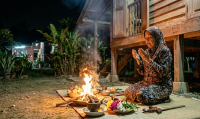
Name: Bomoh
Location/Origin: Malaysia and the Malay Archipelago
Powers: Traditional healer and spirit intermediary; communicates with spirits such as Hantu Raya, Polong, and Pelesit
Appearance: Often elderly men or women in everyday village clothing
Specific Danger: Spiritual retaliation, inherited spirit ties, long-term misfortune
Evolution: Animistic roots → Hindu-Buddhist influence → Islamic syncretism → modern private practice
In Malay history and oral tradition, a Bomoh was never a monster.
They were the last resort. When illness had no physical cause, when a child cried at night for no reason, when a family’s luck collapsed in slow, inexplicable ways, the Bomoh was called. Not publicly. Quietly. Often after sunset. The Bomoh did not claim power over spirits. They acted as intermediaries, negotiating with forces believed to already be present: ancestral presences, forest spirits, or entities such as Hantu Raya, Polong, or Pelesit. These beings were not summoned lightly. They were bargained with, constrained, fed, dismissed, or, in the worst cases, inherited.Historical accounts describe Bomoh who spent decades maintaining fragile agreements, performing rituals not to gain power, but to keep things contained. A mistake could mean illness, madness, or a spirit refusing to leave.In some villages, it was believed that if a Bomoh died without properly severing their bonds, the spirits they worked with would seek new hosts among family members or neighbors. This belief made Bomoh both respected and feared, not for what they could do, but for what they had already taken on.
Warning to Travelers:
If you travel through rural Malaysia, you may never see a Bomoh.
That does not mean they are absent. Traditional warnings advise: do not mock rituals, charms, or offerings, even if they appear mundane, do not photograph ceremonies without permission, do not touch objects left at crossroads, trees, or house edges, do not dismiss local cautions as superstitionIn folklore, harm rarely comes from curiosity alone, but from disrespect. Spirits are believed to notice intent, not belief. You do not need to believe in them for them to respond. The safest rule passed down is simple:
If something looks intentional, leave it alone.
Symbolism:
The Bomoh represents a boundary figure, standing between: illness and explanation, belief and denial, the living world and what quietly surrounds it. Symbolically, Bomoh embody the idea that not all problems have visible causes, and that some solutions require humility rather than control. They remind communities that knowledge can be dangerous, responsibility inheritable, and power something that extracts a cost over time. In modern interpretation, the Bomoh reflects humanity’s discomfort with uncertainty. Even today, when science fails to provide answers, people still seek meaning, patterns, and intermediaries. The Bomoh survives not because belief persists, but because fear of the unknown never left.