
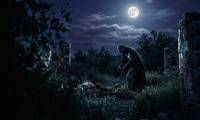
Name: Vrykolakas (Βρυκόλακας)
Location/Origin: Greece (specifically rural villages and islands like Santorini, Crete, and Mykonos). Unlike ancient myths, this is post-classical folklore that persisted well into the early 20th century.
Powers:
The Weight: They sit on the chests of sleepers, causing crushing asphyxiation (sleep paralysis).
Poltergeist Activity: Before they kill, they annoy—breaking dishes, spilling wine, and terrifying livestock.
Pestilence: If left unchecked, their presence rots the village, bringing plague and wasting diseases to the living.
Appearance: Unlike the pale Western vampire, the Vrykolakas is ruddy and swollen. The skin is stretched tight and hard like a drum (hence the nickname Tympaniaios). If you strike the body, it makes a hollow, resonant sound. They do not rot; they gorge.
Specific Danger:
The Single Knock.
The Vrykolakas will return to its own house or the houses of relatives. It will knock on the door and call your name—but only once. If you answer the door without waiting for a second knock, you invite it in, and death follows.
Evolution:
From Wolf to Corpse: Originally linked to lycanthropy (someone who wore a wolf skin), the legend shifted over centuries to become a revenant—the soul of a sinner, someone excommunicated, or someone buried without proper rites who cannot leave their body.
From Nuisance to Monster: In folklore, they often start as mischievous spirits (pulling blankets off beds) and slowly evolve into deadly plague-carriers if not exhumed and burned.
The Vrykolakas is a biological horror—a corpse that refuses to rot. It is not born, but made: created when a man dies excommunicated, buried without rites, or even if a cat jumps over his open grave.The body does not decay; instead, it swells with dark fluids until the skin becomes tight, hard, and resonant like a drum (Tympaniaios). Driven by a mindless muscle memory, the creature returns to its former home. It sits at the family table and sleeps in its old bed, but its presence is lethal. It feeds by sitting on the chests of sleeping relatives, slowly crushing the breath—and life—out of the people it once loved.
Warning to Travelers:
If you are staying in a village where the elders still paint crosses on their doors with smoke, you must learn the law of the threshold.The Vrykolakas is a creature of habit. When it stalks the streets at night, it remembers the manners of the living. It will not break down a door; it will knock. It may even call out to you in a voice that sounds familiar, asking to be let in.Do not answer.Wait. Hold your breath and wait. The Vrykolakas has no patience and no mind for persistence. It is bound by a compulsion to knock only once. If silence meets its call, it will turn and shamble away into the dark. But if you open that door—or even ask "Who is it?"—you have given it permission. And once invited, the Drumming Corpse will never leave until it has emptied your house of life.
Symbolism:
The Fear of the Physical: Unlike ghosts (which are spiritual), the Vrykolakas represents the horror of the biological body. The description of it being "swollen" and "drum-like" is a pre-scientific description of decomposition (bloating). It is the fear that our loved ones become "meat" rather than spirits after death.
The Guilt of the Survivor: The monster always attacks its own family first. This symbolizes the survivor's guilt or the "weight" of grief that sits on the chest of the living, suffocating them slowly after a funeral.
The Unwanted Guest: In a culture famous for Xenia (Guest Friendship/Hospitality), the Vrykolakas is the ultimate perversion. It is the guest you cannot let in, flipping the most sacred Greek social rule on its head.